



















ORBYS
ORBYS in the educational sector: the evolution of the classroom with AI
“The current context of AI in the educational environment”
On January 29, 2026, at ORBYS we organized a training event dedicated to analyzing the role of artificial intelligence in educational institutions. During the meeting held in Alcatí, we brought together experts from the sector to explore in depth how AI is transforming education, the opportunities it offers for the classroom, and the key aspects for safe and responsible use. This event reinforced our commitment to innovative education and helped bring teachers and institutions a clear and up-to-date vision of how AI can be integrated into the school environment.
Transforming the 21st-century classroom with AI
Transforming the 21st-century classroom with AI
First, José Aguilera, a lecturer at leading universities and in secondary education, demonstrated how artificial intelligence is already driving more personalized and efficient education in everyday practice. AI makes it possible to create materials tailored to each student’s level, generate learning pathways, provide immediate feedback, and support inclusion. For teachers, it represents a key form of support: it automates repetitive tasks, assists with planning, and enables more agile analysis of student progress.
Tools that are already present in many institutions were also presented: adaptive learning platforms, AI-powered LMSs, educational chatbots, interactive content creators, accessibility solutions, and immersive technologies such as virtual reality.
All of this was accompanied by recommendations for responsible use:
- Define objectives
- Create clear prompts
- Compare tools
- Always maintain human supervision.
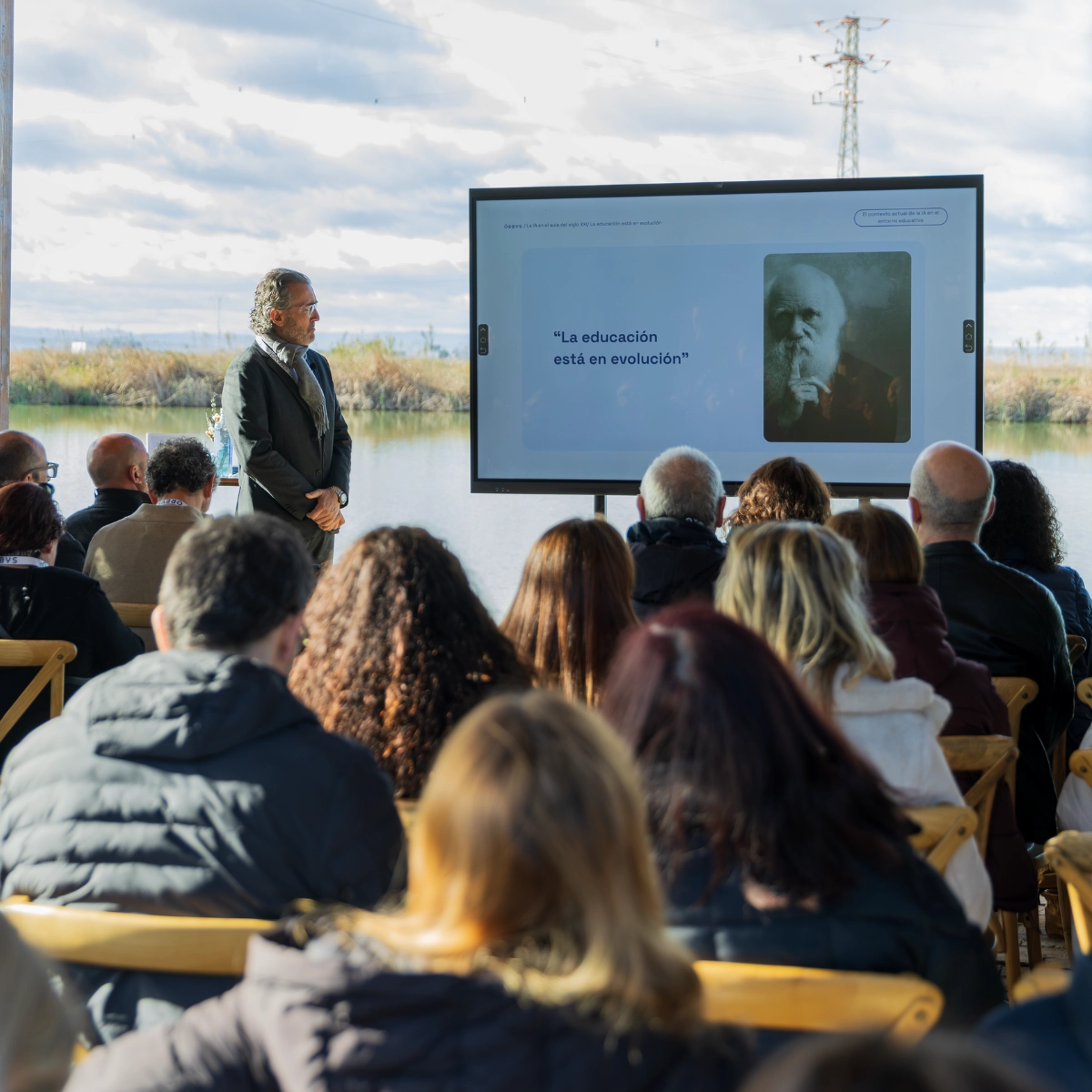
“In short, it is necessary to create a personalized plan and adapt activities to the students’ level.” ---- José Aguilera., PhD. Engineer in Telecomunications
AI yes, but safe: principles for responsible and protected AI
AI yes, but safe: principles for responsible and protected AI
The second presentation focused on how to use artificial intelligence in educational institutions responsibly, always ensuring the protection of students. It explained what is considered personal data and why even indirect information such as descriptions, contexts, or characteristics that can identify a student must therefore be handled with special care.
To help institutions evaluate AI tools, the “risk traffic light” was presented, which distinguishes between:
- High-risk uses: automated assessment, proctoring, or anti-plagiarism.
- Directly prohibited uses: emotion recognition or social scoring.
- Prior evaluation before implementation.
The issue of Shadow AI was also addressed, referring to situations where teachers use unauthorized tools, and guidelines were provided to prevent this through training, clear policies, and secure alternatives.
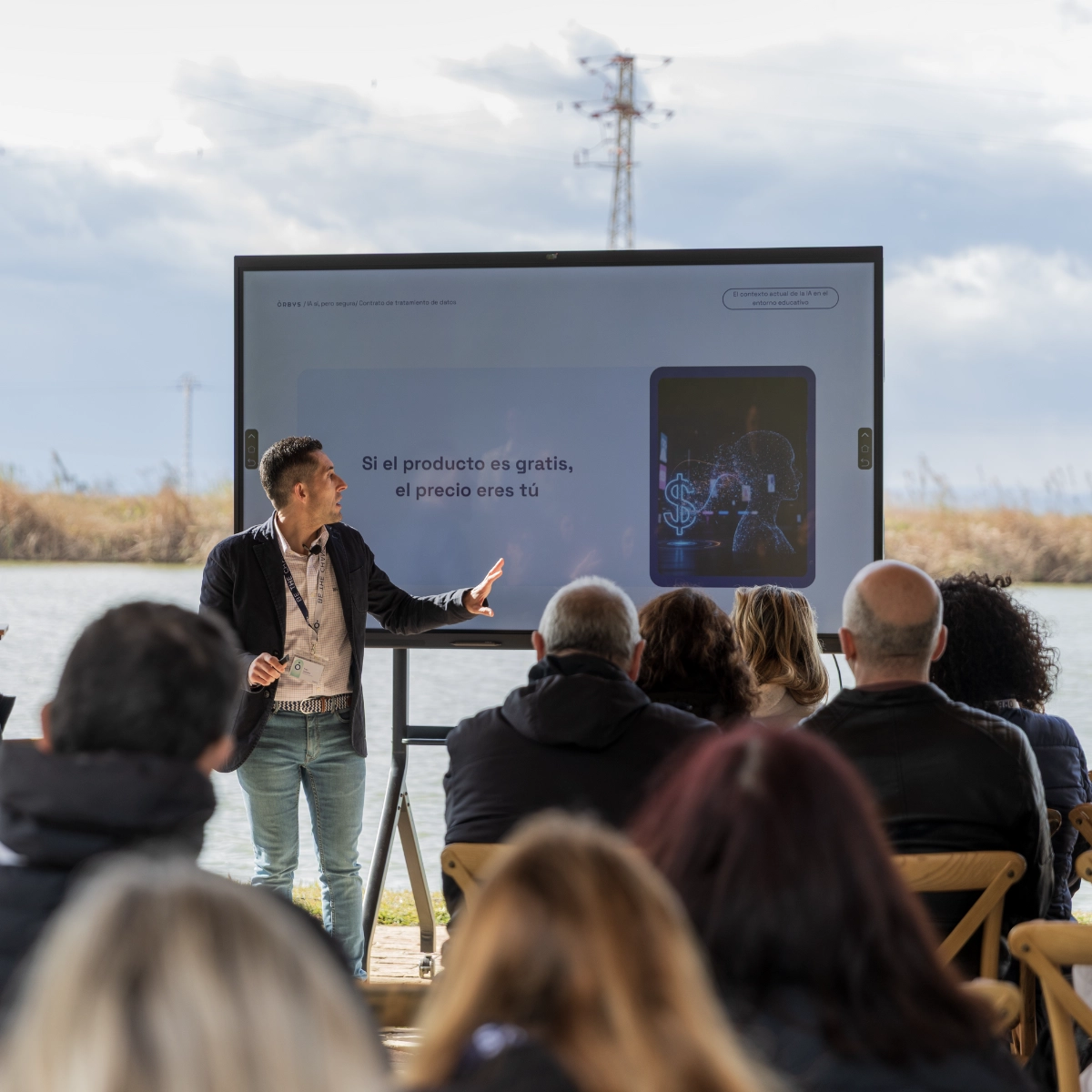
“It is very important to be aware, when accessing a free version, of what we are agreeing to and what is done with our data.” — Fran Cabrera, CTO & Co-founder of ORBYS
Event results: promoting useful and responsible AI in the classroom
Event results: promoting useful and responsible AI in the classroom
In summary, the meeting in Alcatí allowed us to bring the educational community a clear vision of how to apply AI in the classroom in a useful and safe way. In addition, the participation and interest of attendees reinforce our commitment to continue promoting innovative and responsible education.
From ORBYS, we will continue to organize training initiatives and share knowledge, news, and updates to support teachers and institutions on this path toward an increasingly solid and conscious integration of AI.